
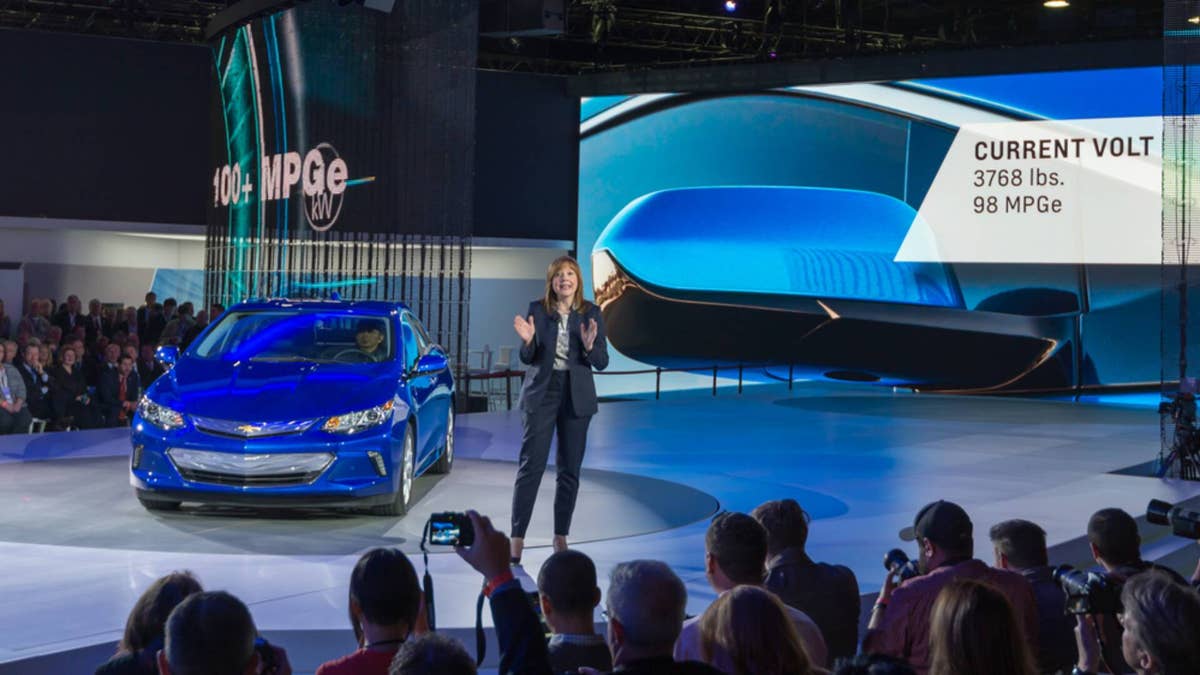

Rising gas prices may have some consumers on edge, but car buyers haven’t yet changed their buying habits, according to General Motors CEO Mary Barra.
In March, the median lower-income household spent 4.2% of its income on gasoline, up from 3.9% a year ago, but still below the levels reached in 2022.
Middle- and higher-income consumers, “buffeted by both escalating gas prices and volatile financial markets in the wake of the Iran conflict, exhibited particularly large drops in sentiment,” according to the latest University of Michigan Survey of Consumers.
In March, gasoline prices rose by more than $1 per gallon for regular unleaded. Americans turned to plastic to cover the increase, as gasoline card spending rose 16.5% month over month, according to the bank’s aggregated credit and debit card data.
Economists at the Stanford Institute of Economic Policy Research estimate that the war has pushed Americans’ average annual gasoline costs up $857 this year.
But despite the concerning economic situation, Barra says GM hasn’t yet seen a major change in consumer behavior.
GM CEO Mary Barra isn’t concerned about rising gas prices, yet
Automakers haven’t yet seen a dip in consumer purchases. Still, in an interview with “Good Morning America,” GM CEO Mary Barra says that, so far, car buyers are paying off their auto loans.
“It’s something that we are watching carefully. And we are really proud of the fact that we have six models at General Motors that start under $30,000. People are still buying cars,” Barra told ABC.
The interviewer followed up on her question, asking whether car buyers are still paying their auto loans on time. Barra said, “That is what we are seeing.”
Related: Ford makes a move frugal car buyers will love
While affording a new car is one thing, being able to put gas in that vehicle is another story, as the Iran war has sent fuel prices skyrocketing with no real end in sight. So how does GM manage that threat?
“It depends on what people think. It’s not just with the prices today; it’s more about how long they think [high gas prices are] going to persist. And I think that is why we really aren’t seeing a strong reaction yet,” Barra said. “When people need a new car, they need a new car.”
But the data tell a slightly different story. Auto loan delinquency rates were at their highest levels in over a decade before the Iran war even started, according to Bankrate, driven by high prices and stubborn inflation.
“Inflation remains a clear omnipresent issue for them [consumers], whether it’s vying to pay their automotive loan, their insurance, their gas bill, or their food bill,” said Jeremy Robb, acting chief economist at Cox Automotive. “The consumer is kind of strapped.”
While GM isn’t seeing a reaction now, Barra was asked what would happen if $5-per-gallon gas prices were a reality as late as Labor Day.
“Of course, it concerns me because I know affordability is an issue for every American,” Barra said in the interview.
“And so we want to make sure that people have the opportunity to afford what they need, which is why we focus on having affordable vehicles. It is something that we are watching because I think it speaks to the overall health of the economy. Which is important for the country, important for jobs, and obviously, we hope the conflict in Iran ends as quickly as possible,” Barra said.
GM is actively cutting back on incentives
GM rival Ford has turned to incentives to get hesitant car buyers through the door. The strategy has worked well for the company in the past; however, there is a downside to it.
Incentive spending means lower margins on each sale, and over the course of a quarter or fiscal year, those lower margins add up.
So while Ford is actively leaning into incentives, rival General Motors, which sold the most vehicles in the U.S. last year and holds a 17% market share, is going the opposite way.
During the company’s first-quarter earnings call, CEO Mary Barra bragged that GM “delivered these results with incentives that continue to be among the lowest in the industry for both ICE and EVs.”
The company preached “incentive discipline” as it reported an incentive spend per vehicle as a percentage of MSRP that was more than 2% below the industry average.
“Our broad ICE and EV portfolios remain key competitive advantages versus our peers, and our disciplined approach to inventory and incentives keeps us agile,” CFO Paul Jacobson said.
Barra sees their incentive discipline as giving the company an advantage over competitors like Ford, which relies more on incentives.
“I think because of our lean inventories, and if you look at some of the incentive rates of some of the competitors, you can see how disciplined we are and still selling every truck that we can. And so I think that’s the formula and the recipe that we’re going to continue to do is work to earn every truck buyer in a disciplined way because of the strength of our products,” Barra said.
Related: GM CEO Mary Barra gets an important answer from President Trump