


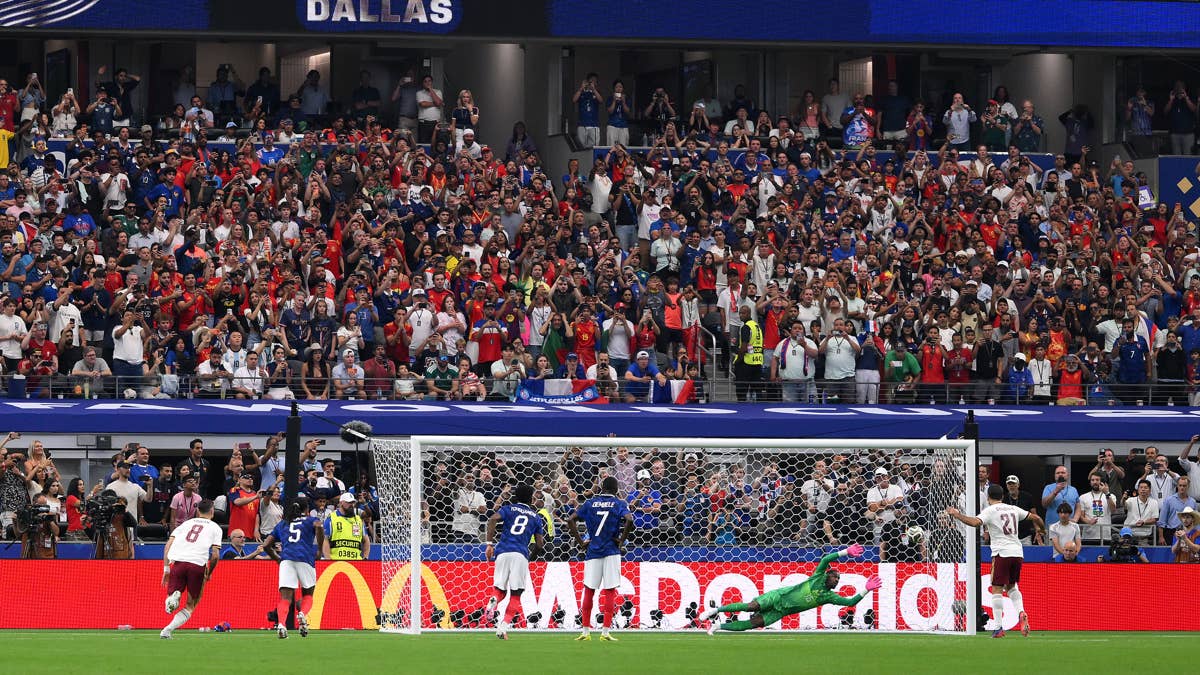

The ongoing FIFA World Cup 2026 is producing winners and losers both on and off the field.
On the pitch, the home fans faced heartbreak when Team USA’s run came to an end with a 4-1 loss to Belgium.
Off the field, however, host cities continue to win.
Soccer fans traveling to matches, gathering at bars and restaurants, and exploring host cities have helped lift spending across every U.S. market hosting World Cup games, according to new data from Bank of America.
The tournament has been particularly valuable for restaurants and bars, businesses that benefit even when fans never enter a stadium.
A customer may buy a match ticket only once, but that same fan can spend repeatedly on hotel rooms, restaurant meals, drinks, transportation, entertainment, and merchandise throughout a trip.
This makes the World Cup more than a major sporting event.
It is also becoming a real-time test of how large events can reshape local consumer spending.
World Cup fans lift spending across U.S. host cities
Bank of America analyzed aggregated credit and debit card spending across the 11 U.S. World Cup host cities.
Based on this, the firm found that in-person spending in those cities increased by 5.4% year over year during the group stage.
More Retail:
- 60-year-old retailer closes over 240 locations across 35 states
- Retail giant exits U.S. fashion after multi-million-dollar scandal
- 79-year-old fast-fashion retailer closes 128 stores
The strongest increase came from consumers traveling outside their home markets.
Spending by “non-local” customers jumped 17.4% year over year, significantly outpacing the roughly 3% increase in spending by local customers.
It suggests that traveling supporters are providing the clearest financial boost for local businesses.
Fans arriving for matches are not limiting their spending to stadiums.
They are also buying meals, drinks, and other goods around the cities they visit.
Cities that hosted Team USA matches saw immediate gains:
- Los Angeles (which hosted two U.S. group stage games) recorded an overall 6.8% increase in spending.
- Seattle recorded a 5% increase.
- San Francisco also recorded strong growth in restaurant and bar spending.
And spending remained strong as the tournament moved into its knockout rounds.
During the Round of 32 and Round of 16, in-person spending across the host cities was 5% higher than a year earlier.
All 11 markets analyzed by the firm recorded positive growth.
But the largest spending gains were concentrated in Kansas City, Los Angeles, and Miami during that period.
All three cities were also high-stakes quarterfinal host cities, giving them the opportunity to benefit from tournament traffic.
Why did Boston and Miami lag?
However, not every host city achieved similar gains in restaurant and bar spending during the group stage.
Boston and Miami were the only host cities that did not record acceleration in restaurant and bar spending.
Other forms of retail spending also slowed in both cities.
According to news reports, the large group of Scottish fans who traveled to the U.S. “might have crowded out spending by locals,” said the BofA report.
Simply put, the volume of tourists may have discouraged local residents from coming out, which slowed spending in these entertainment districts.
Meanwhile, New York emerged as an outperformer.
TheStreet observed packed sports bars and World Cup watch parties across the city as soccer fans gathered alongside crowds of Knicks fans.
The New York/New Jersey host market also posted one of the tournament’s strongest performances, getting additional tailwind from the Knicks’ win.
In-person spending increased roughly 6% year over year from June 10 through July 5, placing the market among the five strongest of the 11 U.S. host destinations analyzed by BofA.
Restaurants and bars emerge as major World Cup winners
The clearest spending increase occurred at restaurants and bars.
In the four weeks ending July 4, brick-and-mortar spending at restaurants and bars in host cities increased 5% from a year earlier.
That was twice the 2.5% growth recorded during the previous three weeks.
Restaurant and bar spending across the rest of the country, meanwhile, grew 3.5% during both periods.
An earlier BofA analysis showed a similar divide.
During the three weeks ending June 27, restaurant and bar spending in host cities increased 5.3% from a year earlier, compared with 3.8% growth across the rest of the U.S.
That difference shows why restaurants do not necessarily need to be located next to a stadium to benefit.
Bars hosting watch parties, restaurants near hotels, and entertainment businesses are among those positioned to capture demand from fans before, during, and after matches.
Other forms of brick-and-mortar retail spending also accelerated across host cities after the World Cup began.
This can expand the list of beneficiaries to include convenience stores, apparel retailers, souvenir shops, and other businesses near hotels, stadiums, and fan events.
True World Cup spending boost may be larger
BofA’s findings capture only part of the tournament’s economic impact.
The bank’s credit and debit card analysis primarily measures spending by customers with U.S. addresses.
It does not fully capture purchases made by international tourists using cards issued outside the country.
That is an important limitation for an international tournament that attracts large groups of overseas supporters.
BofA said the total boost to retail activity is therefore likely larger than its card data suggests.
The spending patterns have also shifted as the tournament progresses.
BofA found that the gap between restaurant and bar spending in host cities and the rest of the country peaked around the end of the group stage on June 27.
The boost closely followed the number of matches being played each day.
More games gave consumers more opportunities to gather at restaurants and bars.
Once teams were eliminated and the schedule became smaller, that advantage began to narrow.
It does not mean the spending benefit has disappeared.
Every host city remained above its year-earlier spending level through the early knockout rounds, and the bank said the broader consumer picture remains encouraging.
Spending around the July 4 holiday was also comparable with the previous two years, while the buildup before the holiday was stronger, likely because of the World Cup.
The numbers show that the largest sporting events do not generate revenue only inside stadiums.
They create repeated spending opportunities across an entire city, and traveling fans appear ready to spend well beyond the final whistle.
Related: 99-year-old convenience store chain closing 645 stores